Masonry Contractor in Norfolk, VA
Norfolk’s older neighborhoods date from an era when brick was commonly laid in lime rich mortar, and parts of the city sit in mapped flood zones. Both facts shape how masonry should be repaired here. CMC Chesapeake Masonry repoints, restores and repairs brick and chimneys on homes and commercial buildings across Norfolk, serving the city from our base in Chesapeake.
What Tidal Flooding and Older Brick Mean for Norfolk Masonry
Water from below
Norfolk has mapped flood zones, and the city’s flood zones page directs homeowners to its mapping tool to check a specific address. Coastal storms add to the picture: NOAA’s report on the November 2009 nor’easter documented prolonged high water in the southern Chesapeake Bay. For masonry, water at ground level is the concern. Foundations, steps and the lowest courses of brick are the parts that get wet first and stay wet longest, and repeated wetting is what wears down mortar and brick over time.
Moisture in older solid brick walls
Many older brick buildings have solid, multi layered walls rather than a single layer of brick veneer. Brick Industry Association guidance describes these as barrier walls, which handle water through their mass instead of draining it through a cavity. That works as long as the wall can dry out. When the lower part of a wall stays damp, moisture can wick upward through brick and mortar, and the signs show up as eroded joints near the ground, efflorescence, spalling and damp interior plaster.
Compatible mortar on older brick
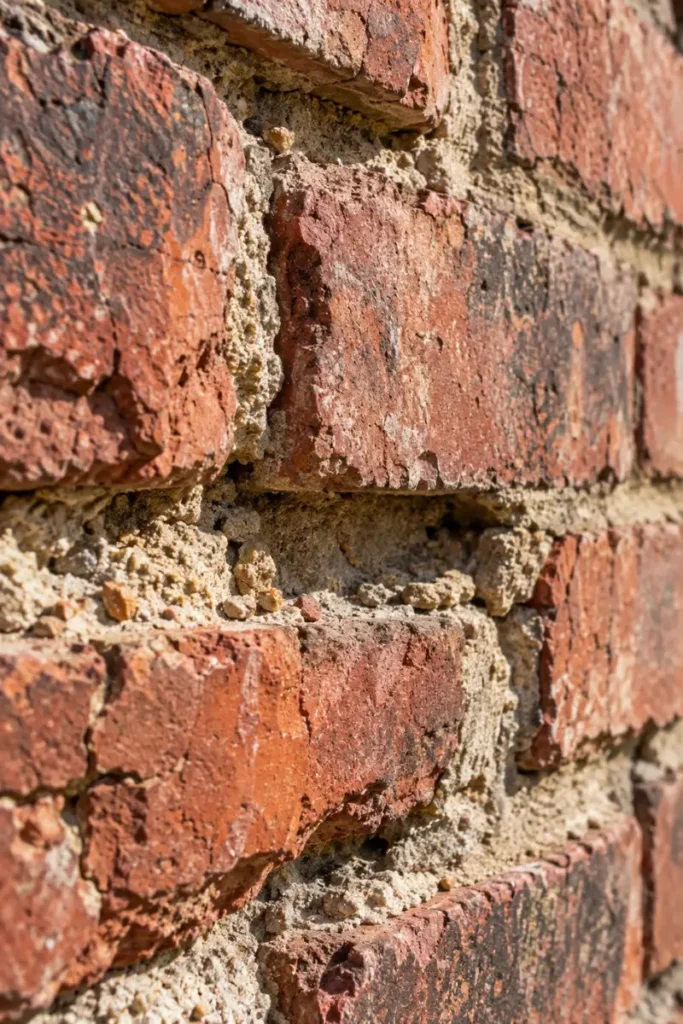
That’s why mortar choice matters so much on Norfolk’s older buildings. National Park Service Preservation Brief 2 explains that replacement mortar should respect the strength and permeability of the original brick and mortar. A hard modern mortar on soft older brick traps moisture in the brick and pushes stress into it, and the damage often shows up as broken brick edges beside joints that still look fine. On a wall that already deals with ground moisture, that mismatch speeds things up.
Historic districts have their own rules
Several Norfolk neighborhoods are local historic districts, where exterior changes go through the city’s Architectural Review Board. The board adopted updated historic design guidelines on May 26, 2026, which apply to applications received on or after June 1, 2026. Masonry work on a visible elevation in those districts should be planned with that review in mind.
Norfolk Homes and Masonry Types
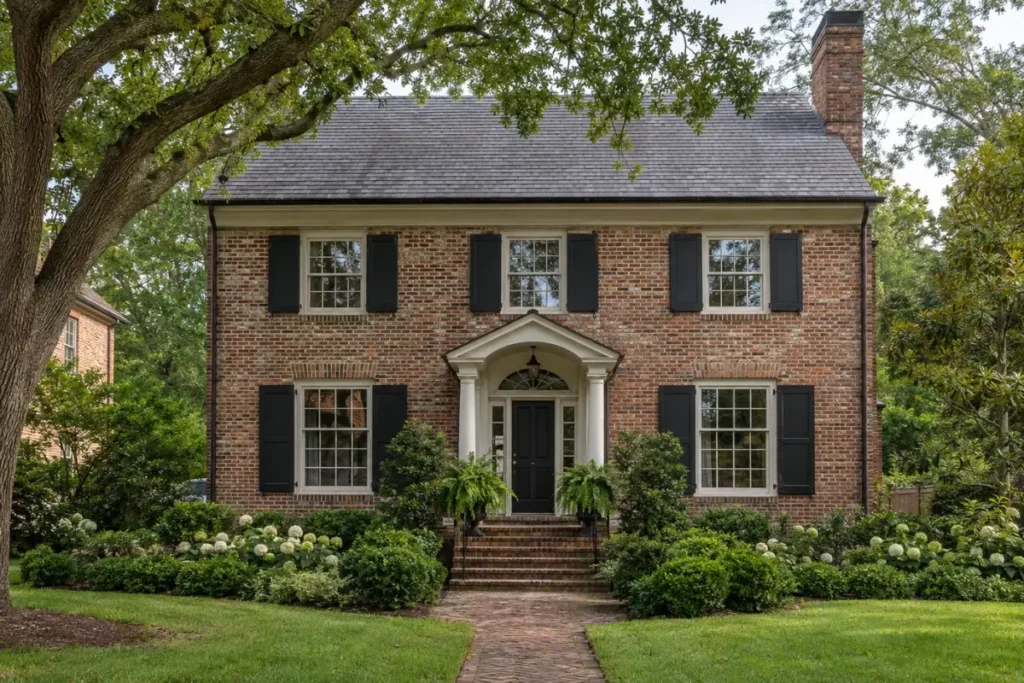
Norfolk’s local historic districts include Ghent, East Freemason, West Freemason, Downtown and the Norfolk & Western Railroad district. The Virginia Department of Historic Resources records that Ghent’s houses were built between 1890 and 1905 in Queen Anne, Colonial Revival and Shingle styles.
Homes of that era often have chimneys that have taken more than a century of weather. Common issues include worn joints near the top of the stack, cracked or missing crowns and old flashing at the roof line. On older brick chimneys, repairs need matching brick and mortar as much as the walls do.
Not every older Norfolk home is brick, and construction varies within neighborhoods, so each building is assessed on its own.
Masonry Services for Norfolk Properties
Tuckpointing & Repointing
Older Norfolk brick usually needs a softer, compatible mortar. Joints are cut out carefully and repointed with a mix matched to the brick and the original joint.
Masonry Restoration
When deterioration runs across a facade, or earlier repairs used hard mortar or coatings, restoration plans repointing, unit replacement and cleaning together.
Chimney Repair
Century old chimneys get crown repair or rebuilding, new flashing, repointing and partial rebuilds, matched to the original brick.
Masonry & Brick Repair
Damaged brick, steps and foundation sections, often near ground level where water does the most harm, are replaced and matched.
Permits and Historic Review in Norfolk
Building permits. Norfolk’s Planning and Building Safety FAQ is the starting point for permit questions and contacts. Virginia’s statewide code exempts retaining walls supporting less than three feet of unbalanced fill from a building permit, with exceptions; Norfolk’s own FAQ has listed a lower figure for walls, so confirm the current rule with the city for your project. When a permit is needed, we handle it.
Historic review. If your property is in a local historic district, exterior work goes through the Architectural Review Board. The board’s page explains how to check a property’s local historic status through its planning information, and the updated design guidelines apply from June 1, 2026. Listing on the National or Virginia Register alone does not create that review; the local district list does.
Flood zones and the Bay buffer. Check your address through the city’s flood zones page before planning foundation or lower wall work. Near shorelines, Chesapeake Bay Preservation Area rules can also apply; Norfolk’s guidance on permeable paving, for example, notes that work inside a Bay Preservation Area buffer can require a minor site plan review.
Norfolk Neighborhoods We Serve
We work throughout Norfolk, including the historic districts of Ghent, West Ghent and Freemason, and neighborhoods such as Ballentine Place, Bayview, Campostella, Norview, Ocean View, Park Place, Talbot Park, Wards Corner and Willoughby.
Norfolk Masonry FAQ
Can flooding damage brick foundations?
Yes, over time. Water that sits against or soaks into a foundation wears down mortar and brick, and older solid brick can wick moisture upward into the walls above. Repeated wetting is the problem more than a single event. Repairs focus on compatible mortar and replacing damaged units, together with getting water away from the foundation.
Are there rules for masonry work in Norfolk historic districts?
Yes, if the property is in a local historic district. Exterior changes go through the Architectural Review Board, which adopted updated design guidelines for applications received from June 1, 2026. Check your property’s status with the city before starting work on a visible elevation.
Does an older Norfolk home need lime mortar?
Often, but not automatically. Older brick usually needs a mortar softer and more permeable than the brick, and on many older homes that points to a lime rich mix. On walls that stay damp near the ground, that permeability lets moisture leave through the joints instead of the brick. The right mix is chosen for the specific wall and matched to the existing mortar. Our article on mortar matching for older brick explains the reasoning.
Working on an older Norfolk home?
Call (757) 290-8274 or request a free estimate. Across the river, our Portsmouth page covers that city’s historic districts.