
Stone Masonry in Chesapeake, VA
Stone is chosen for how it looks and how it ages: a garden wall that settles into the landscape, steps that feel solid underfoot, a front elevation with real texture. CMC Chesapeake Masonry’s stone masons work with natural and manufactured stone in Chesapeake, building walls, steps, columns, veneer and outdoor features, and repairing and repointing stonework that has loosened or worn.
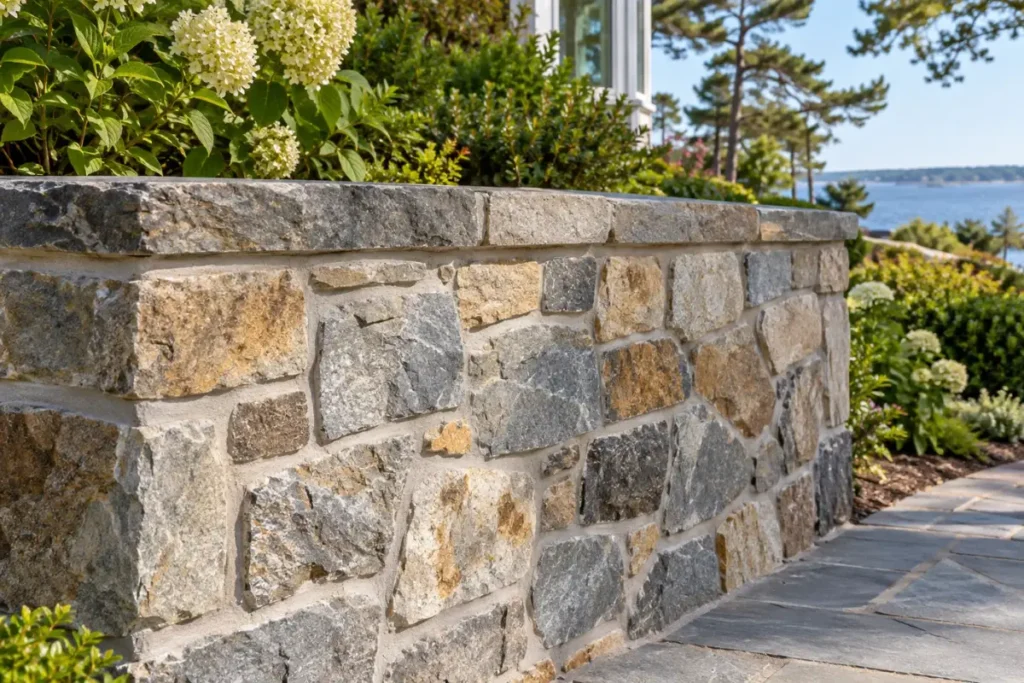
Natural vs. Manufactured Stone
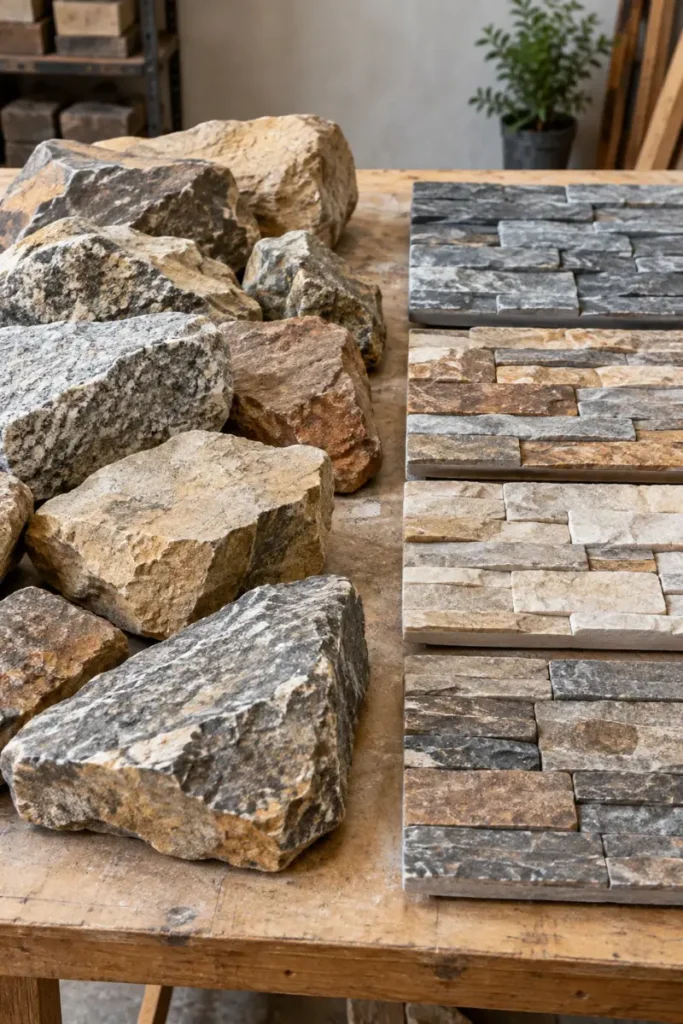
The first decision on most stone projects is which kind of stone to use. They look similar from the street but behave differently.
Natural stone is quarried rock, cut or split to size. It is heavy, each piece is unique, and it can be used in full thickness for freestanding walls, steps and structural features, or cut thinner as a veneer. Its durability depends on the type of stone; there is no single rule that covers every kind.
Manufactured stone veneer is a cast product made to look like stone. The Concrete Masonry & Hardscapes Association’s installation guide for adhered manufactured stone veneer describes it as a lightweight, non loadbearing cladding: it covers a wall but does not hold anything up.
What that means in practice:
| Natural stone | Manufactured stone veneer | |
|---|---|---|
| Weight | Heavy; full thickness stone needs a footing or ledge | Lightweight; adhered to a prepared wall |
| Appearance | Every stone unique; color runs through the stone | Consistent patterns; molded surface |
| Best suited to | Freestanding walls, steps, structural features, veneer | Cladding house walls, columns and fireplace surrounds |
| What drives cost | Stone type, thickness, weight, labor | Product, substrate preparation, detailing, labor |
Neither is automatically more durable. Performance depends on the specific stone or product, and above all on how it is installed.
Stone Veneer and Moisture Management
Stone veneer on a house wall is only as good as the system behind it. Most stone veneer problems are water problems, and in Chesapeake, where storms drive rain against walls, the details behind the stone matter as much as the stone.
CMHA’s installation guide treats adhered stone veneer as an integrated system:
- A suitable substrate, the wall the veneer is attached to
- A water resistive barrier behind the veneer, so water that gets through the stone doesn’t reach the framing
- A drainage path or rainscreen, giving that water a way down and out; CMHA’s guidance on rainscreens and water resistive barriers explains how these are coordinated with code and manufacturer requirements
- Lath and mortar that bond the veneer to the wall
- Flashing and termination details, including a weep screed at the base that lets water exit, and clearance above the ground and paved surfaces so the bottom edge doesn’t sit in water
When any of these is missing, water gets in and has nowhere to go.
Signs of trapped moisture behind stone veneer
- Staining or white efflorescence on the stone, especially below windows or at the base
- Stones loosening or falling off
- Cracks running through the mortar joints or the stones
- Stone carried right down to the soil or paving with no visible gap
- Damp, musty or stained areas on interior walls behind the veneer
These call for a look at the wall system, not just the stone. Brick clad walls use a different system with an air space and wall ties, covered under brick veneer repair and installation.
Stone Walls, Steps and Features
We build:
- Garden walls, freestanding or as low landscape borders
- Stone steps and step facings
- Columns and piers, for entrances, gates and porches
- Outdoor features such as planters and seat walls
Dry stacked vs. mortared stone
A dry stacked wall is built without mortar. The Stone Trust’s guidance on building dry stone walls explains that it holds together through how the stones interlock, friction, the small stones packed into the core (hearting) and through stones that tie the faces together. It takes skill, flexes slightly with the ground and lets water drain through.
A mortared stone wall is bonded with mortar on a footing. It gives a more formal, finished look and suits steps, columns and walls that need to stay perfectly aligned.
One caution: "dry stack" is also used for stone veneer laid with tight, hidden joints. That is still an adhered veneer system with mortar behind it, not a true dry stone wall.
Walls that hold back soil are a structural job with their own design, drainage and permit questions, covered under retaining walls.
Stone Repair and Repointing
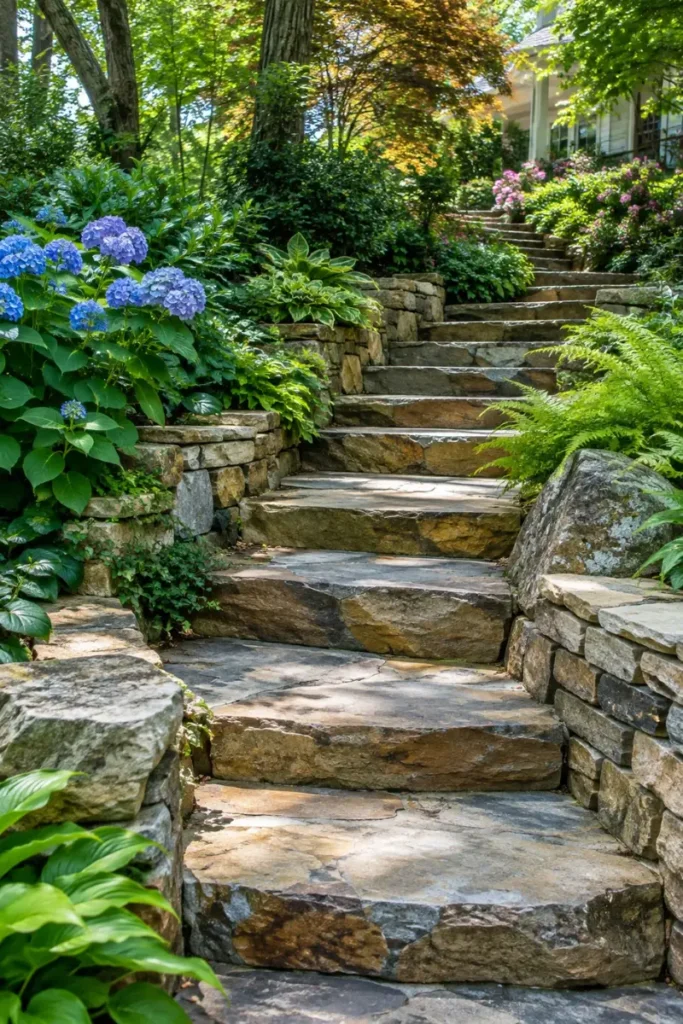
Stonework wears in a few familiar ways: stones that have worked loose from walls or steps, cracked or broken stones, and mortar joints that have eroded, cracked or fallen out.
Repair means resetting or replacing loose and damaged stones and repointing the joints. The mortar choice matters as much with stone as with brick. National Park Service Preservation Brief 2 applies the same compatibility principle to stone: the new mortar should suit the stone’s hardness and permeability, so that the joint, not the stone, takes the wear. A harder or stronger mortar is not automatically better, and no single mortar type is right for every stone. On older or softer stone, samples and sometimes analysis of the existing mortar guide the mix. The general repointing process is described under tuckpointing and repointing, and damaged brick or block next to stonework under masonry and brick repair.
Related Services and Areas We Serve
Stone walls that hold back soil are built under retaining walls. Older stone foundations and walls with widespread wear may need a broader masonry restoration. For brick cladding rather than stone, see brick veneer repair and installation.
Chesapeake is our primary market. We also build and repair stonework in Suffolk and Virginia Beach.
Stone Masonry FAQ
Is manufactured stone durable in a humid climate?
It can be, when it is installed as a complete system. Manufactured stone sheds most water but not all of it, so the water resistive barrier, drainage path, flashing and weep screed behind it decide how well it performs in a wet climate. Problems usually trace back to those details, not to the stone itself.
Can stone be added over existing siding or brick?
It depends on what’s underneath. Manufactured stone is installed over a suitable substrate with a water resistive barrier, lath and flashing, following the product’s installation requirements. Existing siding is not part of that system, so the wall has to be assessed and prepared first. Existing brick can sometimes serve as a base if it is sound and the product’s requirements allow it. Full thickness natural stone also needs support for its weight, such as a footing or ledge.
Can you match stone on an existing wall?
Often, though natural stone varies even within one quarry, so an exact match isn’t always possible. Matching involves the stone type, color range, size and shape, the way it’s laid and the mortar color and joint style. For an addition or repair, matching the joints and pattern goes a long way toward making new stone blend in.
Planning a stone wall, steps or veneer?
Call (757) 290-8274 or request a free stone masonry estimate.