
Masonry & Brick Repair in Chesapeake, VA
A cracked brick over the garage door, a step that rocks underfoot, a corner of the foundation where the brick faces are flaking away. CMC Chesapeake Masonry repairs damaged brick, block and stone on homes and commercial buildings in Chesapeake, replacing the units that have failed, matching them to the wall around them and dealing with whatever caused the damage.
What Masonry & Brick Repair Covers
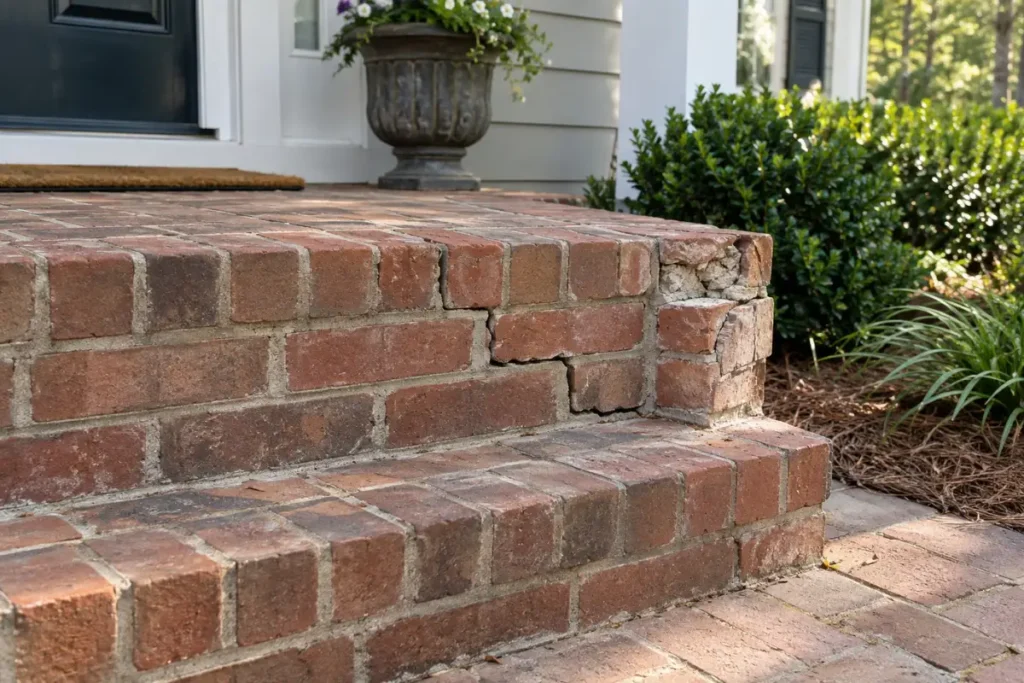
This service is for damage you can point to now, in a specific place. That means repairing or replacing cracked, spalled, broken or loose units, whether brick, concrete block or stone, along with the mortar immediately around them. Typical repairs are on house walls, steps, foundations, mailboxes, wall caps and garden walls.
Two related jobs have their own pages. When the problem is the mortar joints themselves and the bricks are sound, that is tuckpointing and repointing. When deterioration runs across whole walls of an older building, or earlier repairs are causing new damage, the work moves into masonry restoration.
Cracked Brick: What Different Cracks Can Mean
Cracks are the most common reason people call about brick, and they range from cosmetic to serious. The pattern is a clue, not a diagnosis. Brick Industry Association guidance on movement in brickwork connects crack patterns to settlement, restraint and different parts of a building moving by different amounts, and its maintenance guidance stresses that a crack has to be read together with any displacement, its extent and the condition of the surrounding wall.
Step cracks
Cracks that zigzag up through the mortar joints, like a staircase, often follow movement in the wall or the ground beneath it. Many are old and stable. A step crack that keeps widening, or one with bricks offset on either side, needs a closer look.
Vertical cracks
Straight vertical cracks can come from brick expanding and contracting with temperature and moisture, especially on long walls without room to move, or from settlement at one end of a wall.
Horizontal cracks
Horizontal cracks along a joint line deserve attention. They can point to movement, corroding embedded steel or pressure on the wall, and they are worth having assessed instead of simply filled.
Cracks at windows and doors
Cracks that start at the corners of openings, or brick that has lifted over a window, often trace back to the steel lintel above it. That is usually part of a wall system problem rather than a single damaged brick, and it is explained under brick veneer repair.
Ground conditions in Chesapeake
Soil plays a part in some cracking. USDA soil data for Chesapeake shows ground that varies from well drained to much wetter soils lower in the landscape, so how a foundation is supported can differ between neighboring lots. That variability is one reason a settlement crack should be judged on the house in question, not on a general rule.
Cosmetic or worth an engineer? There is no single crack width that proves a wall safe or unsafe. Fine, stable cracks with no displacement are usually repairable as part of normal masonry work. Cracks that grow, reopen after repair, or come with bulging or leaning walls should be evaluated before anything is patched (see When Damage Signals a Structural Problem, below).
Spalling and Crumbling Brick
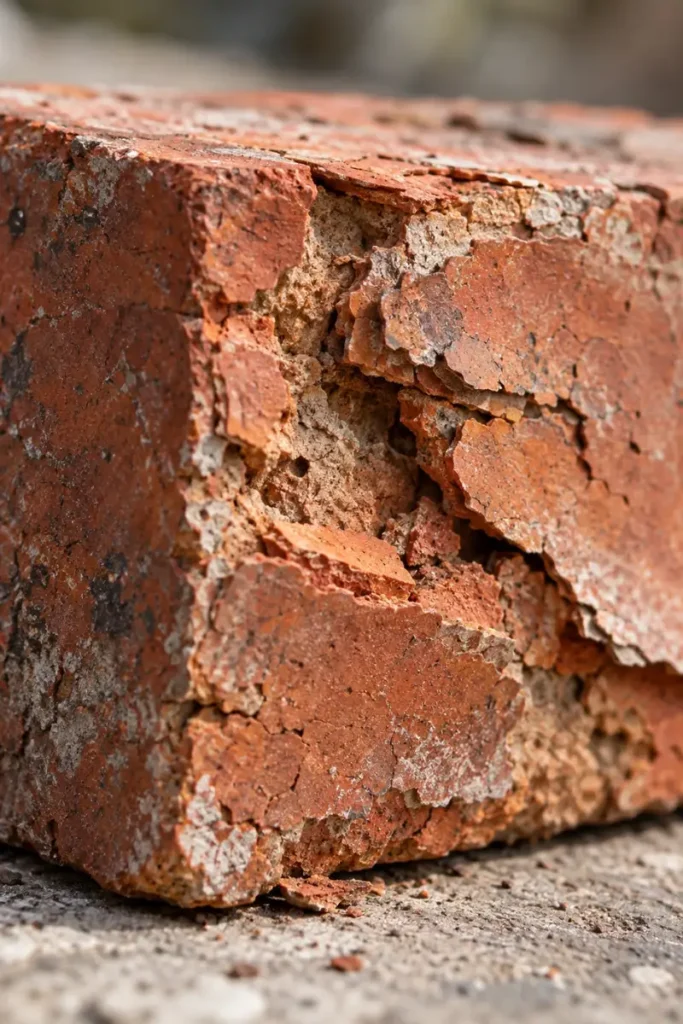
Spalling is when the face of a brick flakes, peels or pops off, leaving a rough, pitted surface. It almost always involves water inside the brick, and it rarely has a single cause:
- Trapped moisture. Water that gets into brick and cannot dry out quickly is the root of most spalling. When saturated brick freezes, or when salts crystallize as it dries, the surface breaks away. Freezing nights are common enough here, around 40 a year below 32°F at Norfolk’s airport, to matter for brick that stays wet.
- Mortar that is too hard. When mortar is harder and less permeable than the brick, stress and moisture concentrate in the brick instead of the joint, and the brick edges spall.
- Non breathable sealers and coatings. Coatings that stop a wall from drying hold moisture behind the surface.
- Salts. Salts carried in by water, including salt near the coast, can break down the brick face as they crystallize.
Repair means replacing the damaged units and fixing the water source behind them. Replacing spalled brick without addressing the moisture tends to bring the same damage back. If spalling is widespread because of past hard mortar repointing or sealers across the building, that points to masonry restoration, which corrects earlier work.
Brick Replacement and Matching
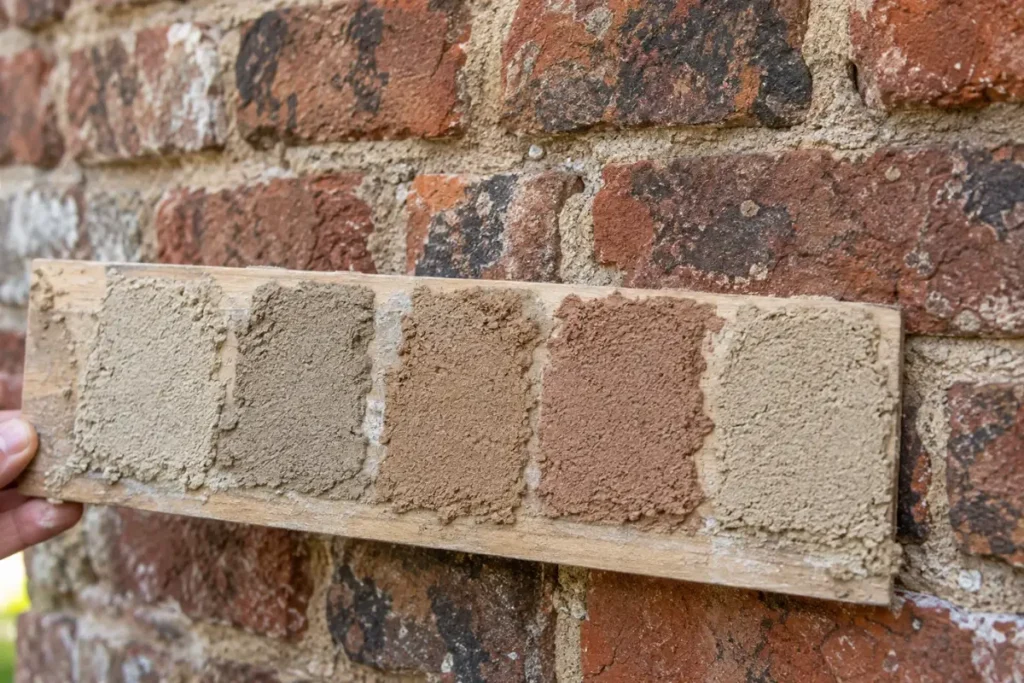
A good brick repair should be hard to find. Replacing a damaged unit starts with cutting it out cleanly, without loosening the bricks around it, and setting the new one in mortar that matches the existing joints.
Matching takes more than picking a similar color. Brick comes in many sizes, and BIA guidance on brick dimensions notes that actual, specified and nominal sizes differ, so the existing brick and joints have to be measured. Color, texture and the way the face has weathered all matter. Replacement brick should also suit the exposure it will face; BIA’s brick grading guidance ties brick grades to weathering conditions.
There are two main sources for a match. New brick can be selected to blend with the existing wall. On older homes, a brick salvaged from a less visible part of the same structure is sometimes the closest match available. Either way, joints are tooled to the existing profile so the repair blends in as it weathers.
If you’re planning new brickwork that needs to match the house, such as steps, a wall or an addition, that falls under brick masonry and bricklaying.
Efflorescence: Cosmetic or a Moisture Warning?
The white, powdery bloom on brick is efflorescence. BIA’s guidance on efflorescence explains how it forms: water dissolves soluble salts inside the masonry, carries them to the surface and leaves them behind as it evaporates.
On new brickwork, a light bloom often fades. Deposits that keep returning tell you water is still moving through the wall, and that matters more than the stain. Cleaning should be gentle and tested on a small area first. If efflorescence keeps coming back, the source of the water needs fixing, whether that’s open mortar joints, a failed cap or flashing, or water wicking up from the ground.
Repairing Steps, Walls, Block and Stone
Not all masonry damage is on the house walls. We repair:
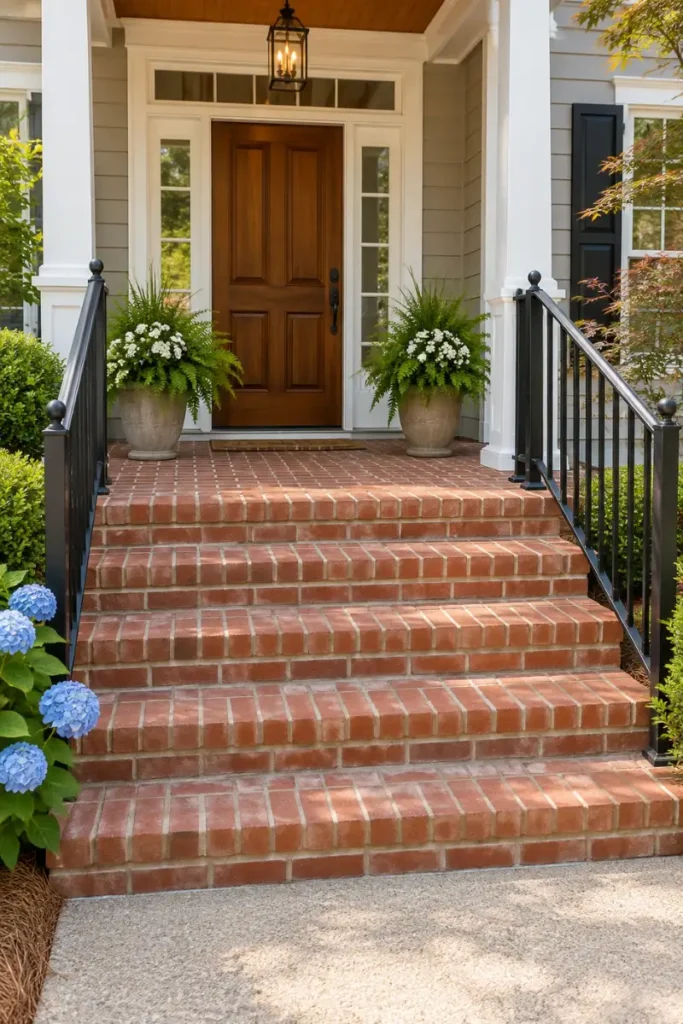
- Brick and block steps, including loose or broken treads, cracked risers and failing step edges. A loose tread is a trip hazard, so these are worth fixing promptly.
- Wall caps and copings that have cracked or come loose and are letting water into the wall below.
- Brick mailboxes and columns damaged by weather or impact.
- Concrete block foundations with cracked or broken units.
- Stone units in walls, steps and features that have cracked or worked loose.
For new stonework or matching stone on a larger scale, see stone masonry. A retaining wall that is leaning or bulging as a whole is a structural problem with its own causes, covered under retaining walls.
Storm and Impact Damage
Hampton Roads sees hurricanes and nor’easters, and the National Weather Service in Wakefield outlines the wind and rain hazards they bring. Masonry damage from storms tends to be sudden and localized: a chimney top knocked loose, a wall struck by a falling tree, a garden wall or mailbox hit by a vehicle. Damaged chimneys are handled through chimney repair.
If the damage may be part of an insurance claim, Virginia’s Bureau of Insurance has guidance for homeowners after a loss. In general terms, it recommends photographing the damage before anything is moved, contacting your insurer promptly, taking reasonable steps to prevent further damage, and keeping receipts. What a policy covers depends on the policy and the cause, so your insurer is the one to confirm that.
When Damage Signals a Structural Problem
Most brick repair is exactly that: repair. But some signs suggest the wall or its support is moving, and those need a structural engineer’s evaluation before a repair is planned:
- cracks that keep widening, or reopen after being filled
- bulging or bowing sections of wall
- walls that lean or are visibly out of plumb
- bricks offset across a crack, or doors and windows that have started to stick alongside new cracking
National Park Service guidance on common brick masonry problems treats signs like bulging and instability as calling for diagnosis, not just patching. When an engineer is involved, the masonry repair follows their findings. CMC Chesapeake Masonry does not provide engineering services. Bulging on brick clad walls is often a veneer attachment issue, covered under brick veneer repair.
When the Problem Is Bigger Than One Spot
Repair is the right approach when damage is localized and has a clear cause. When deterioration shows up across whole walls, especially on older brick, or earlier repairs have started causing damage of their own, a whole wall plan usually makes more sense than repeated spot fixes. Our masonry restoration page explains how to tell the difference.
How a Masonry Repair Job Works
- Inspection. We look at the damage and the wall around it.
- Finding the cause. Water, drainage, movement, impact or an earlier repair: the cause shapes the fix.
- Repair plan. You get a free estimate describing what will be repaired and how.
- The repair. Damaged units are removed and replaced, matched and tooled to the existing work.
Fixing the cause is the part that keeps a repair from failing. A replaced brick under a leaking wall cap, or beside a downspout that empties against the foundation, will be back in the same condition in a few seasons. When the cause is outside the masonry, such as drainage, it needs fixing too.
What Affects Repair Scope and Cost
We don’t publish prices, because two repairs that look similar in photos can be very different jobs. The main factors are:
- Extent of damage: a few units or a larger section.
- Height and access: ground level, a second story wall or a chimney.
- Material matching: standard brick, hard to match older brick, block or stone.
- Underlying causes: whether water, drainage or movement must be addressed first.
A free estimate gives you a number for your actual wall.
Related Services and Areas We Serve
Mortar joint problems are handled through tuckpointing and repointing. Widespread or age related deterioration goes to masonry restoration. Problems with how a brick clad wall manages water, such as blocked weeps, failed flashing or loose ties, are covered by brick veneer repair, and stone walls, steps and veneer by stone masonry.
Chesapeake is our primary market. We also handle brick repair in Virginia Beach, Portsmouth, and on the Peninsula in Hampton and Newport News.
Brick Repair FAQ
Can a single cracked brick be replaced?
Yes. One damaged brick can be cut out and replaced without rebuilding the wall around it. What matters is finding out why it cracked, so the new one doesn’t follow it.
Will repaired brick match the rest of my wall?
A close match is usually possible. The brick is measured and matched for size, color and texture, and the joints are tooled to the existing profile. New brick can look slightly crisper at first and blends further as it weathers.
Are step cracks in brick serious?
Often they are old and stable, but not always. A step crack that is widening, has offset bricks on either side, or appears with bulging or sticking doors and windows should be assessed before it is repaired.
Do you repair block and stone as well as brick?
Yes. We repair concrete block, including block foundations, and stone units in walls, steps and features, as well as brick.
Have a crack, a loose step or flaking brick you want looked at?
Call (757) 290-8274 or request a free brick repair estimate.